
Sama sa , gilabay sa makusog nga huyohoy sa hangin Ang pinat ak sa ulan sa tungang higayon diin, nga ang duha ka managsoon hilom nga naglingkod sa sulod sa ilang panimalay – naghunahuna kon unsaon nila pag-ikyas sa ilang kalisod.
” Nakita nimo!?”…
ang mga magsoon nawad-an og usa ka butang nga importante kaayo sa ilang amahan, usa ka bililhong espada nga iyang nadawat gikan sa iyang amahan isip regalo.
“Ang pagkahanaw atu imung gyung sala” matud pa ug singgit niini.Dili nila gusto nga atubangon ang ilang amahan tungod niini.
Nitumaw sa hunahuna sa magulang ug kini misulti “Ako ang magulang, maong ako gyud Ang sigurado nga basulon ni papa.”
“Katung butanga, atung Ra gyud puhon Makaplagan ug balik ug angay nga dili ta maguol” pulong sa manghod.
Makanunayong naningkamot Ang gamay nga batang lalaki sa pagpangita sa halandong butang.
“Basin kinahanglan lang ta nga mobalik sa atong gidulaan ganiha?”. “Sa akong hunahuna, naa kini sa dapit duol sa kalamakan.
Kinahanglan Makita na nato kini ,sa dili pa mopauli si papa ! Sama sa walay nahitabo.”
” Ayaw Ra gud pagyagayaga Binuang kana nga ideya!”
Mitan-aw ang magulang sa bintana. Nagkakusog ang ulan matag minuto ug nahibal-an niya nga delikado ang pag-adto sa maong bahin sa lasang.”
“Gusto ba nimo nga ikaw ang mosulti kang papa?” Mipahiyom ang manghod.
Ug busa ang duha ka magsoon buot mulahutay sa bagyo ug migawas gyud , padulong sa lasang.
“Dinhi! “
Matud pa sa manghod ug Midagan padulong sa usa ka natumbang punuan sa kahoy.
Murag nakakita kog usa ka butang.”
“Pag-amping! ” Basin Masakitan ka!”
Dali nga misunod ang magulang. Nakakita usab siya og usa ka butang nga morag kislap sa asero gikan sa luyong bahin sa kahoy, ug maoy iyahang nadumduman Ang kanhing mga istorya ,bahin sa mga mga katingalahan nga naay nagpuyo niining bahina sa lasang.
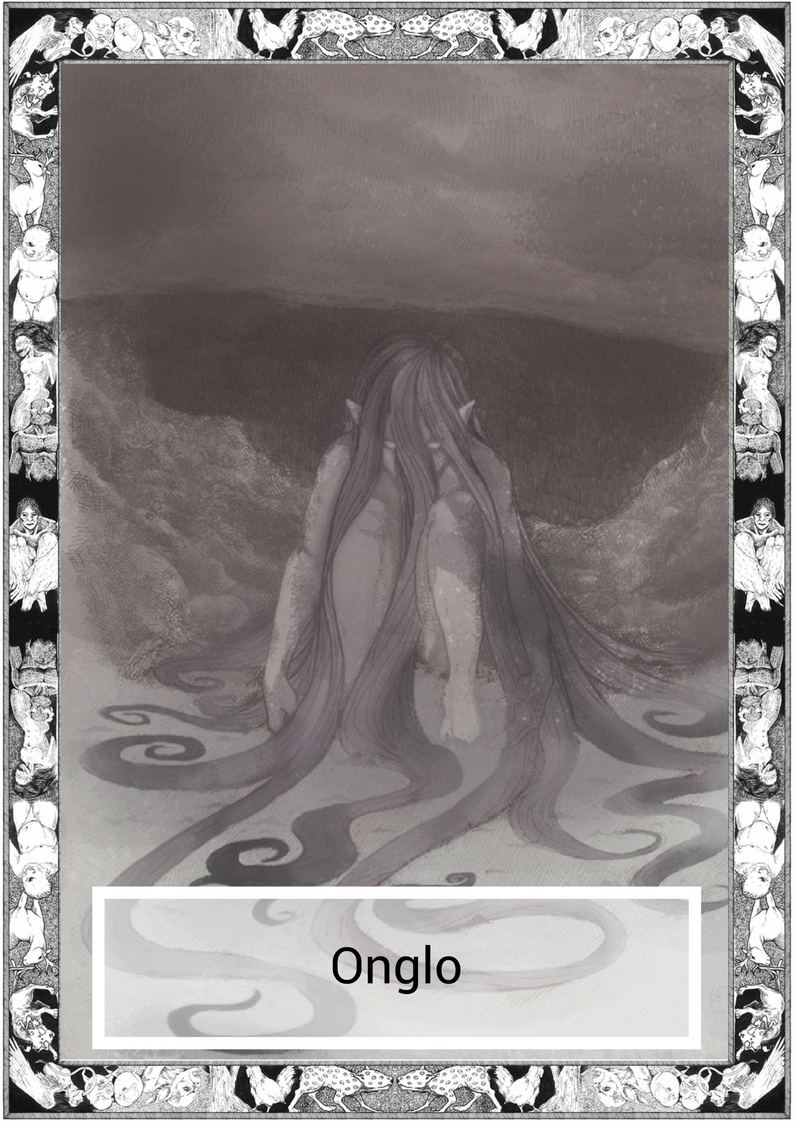
Ang magulang nagtindog ilalom sa troso ug nakita ang iyang manghod nga lalaki nga nag-atubangay sa usa ka higanting unggoy . Kini adunay taas nga itom nga buhok sa halos tibuok lawas niini, hait nga mga dalunggan ug hait nga mga kuko sa mga kamot ug tiil niini. Ang labing makalilisang nga bahin mao ang iyang nawong, ang masuk-anon nga bahin.
Sa iyang kalisang, nakita sa duha ka dagkong mata sa magulang nga lalaki ,nga ang halimaw nga naggunit sa espada.
“Palihug iuli kini kanamo.” “Importante kaayo na sa among amahan.”
Naghunahuna ang manghod ug nanghinaut nga malukmay unta Ang mangtas.
Siguro nga kung kini mahibal, maguol s gyud kini sa pagkahanaw sa usa ka butang nga ilang gimahal.
Mitutok ang magulang sa mangtas. Wala siya kahibalo unsay angayang buhaton. Nakadungog siya nga kining mga butanga moatake sa bisan kinsang tawo nga moduol sa ilang mga balay, apan wala siya mahimo ug nangandam nalang sa sunod nga mahitabo.
Gihatag sa mangtas ang espada sa manghod ug gitudlo kini.
“Salamat!” Ingon sa manghod nga mapasalamaton. “Dali! Makapauli na ta sa dili pa mobalik si papa.”
Busa ang duha ka managsoon midagan padulong sa ilang pinuy anan.. mapasalamaton nga mitalikod ang buotan nga gorilla .Nag-ilis silag tabon nga nagdala sa bug-at nga espada aron mas dali silang makauli.
Apan sa wala pa sila makaabot sa ilang balay, adunay nahitabong makalilisang.
“Nakita nimo,? “
ang hinagiban natabunan na karon sa gagmay, itom nga mga buhok nga gikan sa higanteng mananap. Ang wala mahibal-an sa mga managsoon mao nga kini nga mga buhok makadaot kaayo sa mga tawo.
Ang mga managsoon midagan taliwala sa ulan, apan gibati nila ang sakit kaayo nga kati samtang nagkaduol sila sa ilang balay. Nangati sila ug nangati hangtod nga kinahanglan silang mohunong sa pagdagan.
“Igsoon unsa may nahitabo?!” Naghilak ang manghod. Dili niya mapugngan ang pagkamot. Ang iyang mga bukton ug bitiis natabunan sa hayag nga pula nga mga lama.
“Ambot lang!” Ang magulang nga lalaki nagkatol usab sa ingon ka kusog. Ang iyang gihunahuna mao ang pagkamot hangtod nga makakita siyag kahupayan. Wala gani niya nahibal-an nga naa na sila sa daplin sa suba ug nagkakusog ang ulan.
Nianang gabhiona ang ilang amahan mipauli ug nataranta nga nangita sa ilang kamalig, naghunahuna kung asa na miadto ang iyang duha ka anak nga lalaki.
=—————————–=
English Version
It was the middle of the rainy season, when the raindrops were tossed by the winds, that two brothers sat quietly in their house – wondering how they would get out of their predicament. You see, the brothers had lost something very important to their father, a precious ginunting sword that he received from his father as a gift.
“It’s your fault we lost it!” The older brother yelled. He didn’t want to face his father because of this. He thought to himself “I’m the older one I’m supposed to be in charge, surely papa will put all the blame on me.”
“Don’t worry we can find it.” The little brother replied. The small boy always tried to see the bright side of things. “We just have to go back to where we were playing. I think it was by the part near the swamp. We can find it before papa comes home and it will be like nothing ever happened.”
“That’s a stupid idea!” The older brother looked out the window. The rain was getting stronger by the minute and he knew it would be dangerous to go to that part of the forest.”
“Do you want to be the one to tell papa then?” The little brother smiled.
And so the two brothers braved the storm and went out into the forest.
“Over here!” The younger brother dashed towards a fallen tree. “I think I see something.”
“Be careful! You’re going to hurt yourself!” The older brother followed swiftly behind. He had also seen something that looked like a glint of steel from behind the tree, but he had heard stories about the things that dwelt in this part of the forest. He wasn’t eager to meet them.
His wish did not come true.
The older brother stood under the log and saw his little brother face to face with a monster. It had long black hair over most of its body, pointed ears and sharp claws on its hands and feet. The most terrible part was its face, the angry features reminded the older brother of a gorilla, but much more monstrous.
To his horror, the older brother saw that the monster was holding the sword.
“Please give it back to us. It’s very important to our father.” The younger brother thought that the monster would understand. Surely it would have a father as well and it would know that they would be sad if something they cared about was lost.
The older brother stared at the monster. He didn’t know what to do. He had heard that these things would attack any human that would go near their homes, but he wasn’t prepared for what happened next.
The monster gave the sword to the little brother and pointed away.
“Thank you!” The little brother said with a grateful smile. “Hurry up! We can get home before papa comes back.”
So the two brothers ran towards their home, leaving the monster behind. They took turns carrying the heavy sword so they could get home faster.
But before they could get to their house, something terrible happened.
You see, the sword was now covered with small, black hairs that came from the monster. What the brothers didn’t know was that these hairs were very harmful to humans.
The brothers ran through the rain, but they felt a very painful itch as they got closer to their home. They itched and they itched until they had to stop running.
“Brother what is happening?!” The little brother was crying. He couldn’t stop scratching. His arms and legs were covered with bright red spots.
“I don’t know!” The older brother was scratching just as furiously. All he could think about was scratching until he could find relief. He didn’t even realize that they were next to the river and the rain was getting stronger.
That night their father came home and frantically searched their house, wondering where his two boys had gone.
=—————————–=
*The Cebuano language, alternatively called Cebuan and also often colloquially albeit informally referred to by most of its speakers simply as Bisaya (“Visayan”, not to be confused with other Visayan languages nor Brunei Bisaya language), is an Austronesian regional language spoken in the Philippines by about 21 million people, mostly in Central Visayas, western parts of Eastern Visayas and most parts of Mindanao, most of whom belong to various Visayan ethnolingusitic groups, mainly the Cebuanos. It is the by far the most widely spoken of the Visayan languages, which are in turn part of wider the Philippine languages. The reference to the language as Bisaya is not encouraged anymore by linguists due to the many languages within the Visayan language group that may be confused with the term.
Written by Karl Gaverza
Cebuano Translation by Jag hur Rem
Copyright © Karl Gaverza
Translation Copyright © Jag hur Rem
Story inspired by Inspired by the Onglo description in Bikol Beliefs and Folkways: A Showcase of Tradition. Nasayao 2010
Illustration by Leandro Geniston fromAklat ng mga Anito
FB: That Guy With A Pen
