
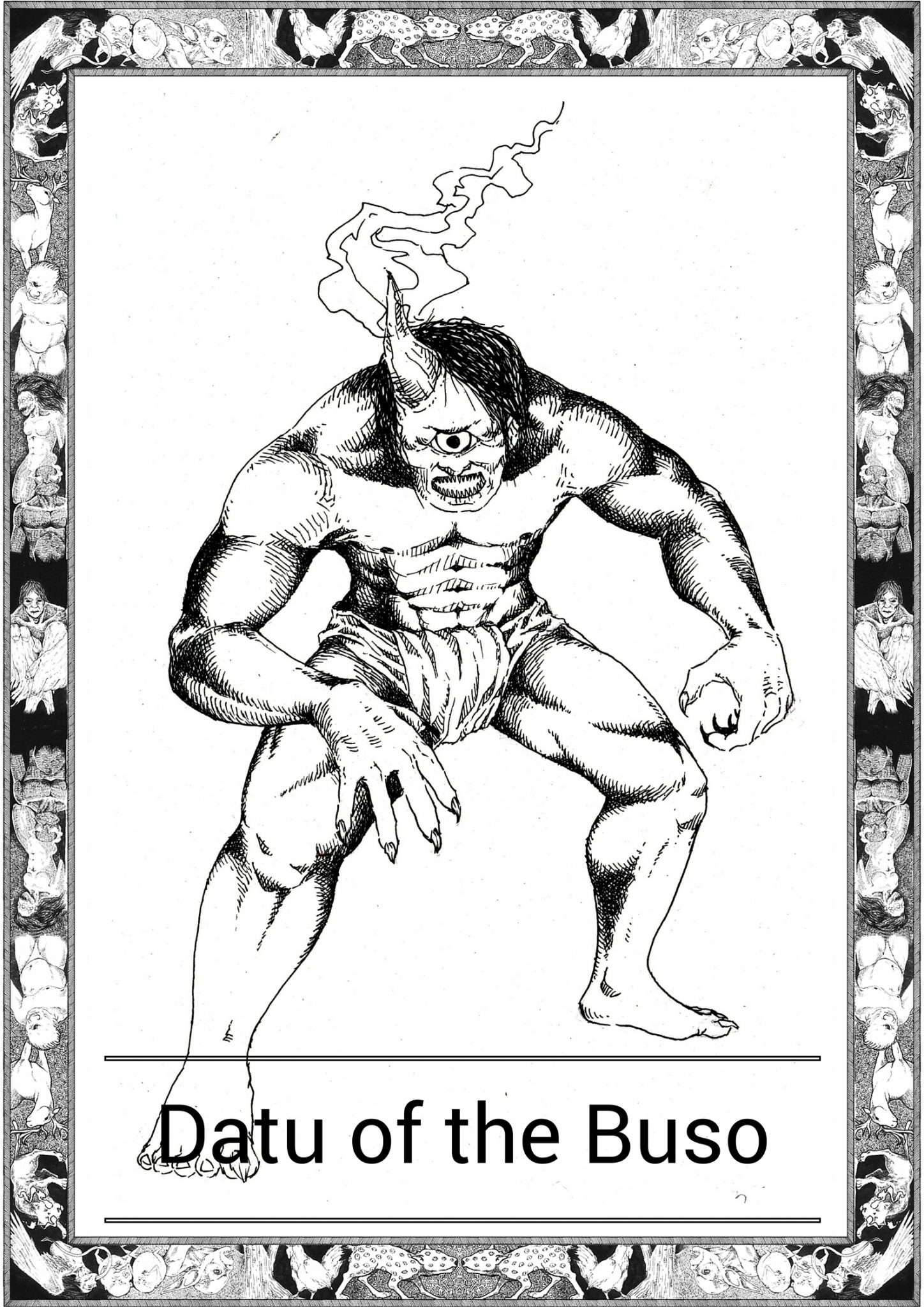
*Note this story is in Bicol Sorsogon
Magub-at ang kadena sa pulsuhan sang preso. Dinara siya sa bag-o na kuwarto. Aram na ning preso na mamamatay siya pag tungtong niya palang sa kuta. Kalokohan na inisip niya pa na magkadi sa siyudad ning Buso, pero aram niya na manggagana kuta siya. Kung naagaw niya lang ini.
Maliwanagon ang mga karaba sa kuwarto, pero wara ini kumpara sa liwanag na hali sa trono. Nababati lang ning preso ang mga istorya tungkol sa hayop na ini, pero wara idto binatbat sa kung gaano kahadlok ang nakikita niya niyan.
Nagdalahay ang dugo sa baba ning Datu. Nakabati ning ibahan na pagkabari ang preso nang sinud-ong siya ning Datu, mapulahon ang saro na mata. May ing huring ini gamit ang sadiring surumaton nang nabugto ang kadena sa kamot ning preso. Lain siya sigurado kung nano ang mangyayari, pero sa suwerte niya niyan, lain ini mayad.
Guminilid ang mga gwardiya ning Buso nang binilin na bukas ang pintuan. Duminalagan ang preso. Lain niya sasayangon ang tsansa. Kung ingpapalaya ninda siya malamang amo ini ang gusto ninda, kung lain man maski papan-o makadulag siya.
Diyot pa siya makasagkod sa atubangan bago siya naabutan sang dako na kalayo.
Nagtitibok sing kalayo ang marpil na sungay ning Datu. Ginuyod ang ulo sang preso nang kinaon. Napaisip ang mga guwardiya nakay pirmi ingkakanaman ning Datu ang pagkaon sadi, pero huminilom lang sinda. Hinihimo ning pagkahadianon kung nano man ang gusto sadi.
=———————=
English Version
The chains felt heavy on the prisoner’s wrists. He was led into a new room. The prisoner knew that he was already dead the moment he stepped in the palace. It was foolish of him to even consider going to the city of the Buso, but he knew glory was on the line. If only he had managed to steal it.
The torches in the room were burning brightly, but they were dwarfed by the blaze radiating from the throne. The prisoner had only heard stories about this creature, but those words could not do justice to the horror that sat before him.
Blood dripped from the Datu’s mouth. The prisoner heard a sickening crunch and the Datu stared at him with its one red eye. It mumbled something in its language and the prisoner’s chains were set loose. He wasn’t sure what was happening, but, with his luck, it wasn’t something good.
The buso guards gave way and left the doorway open. The prisoner ran. He wasn’t going to let his chance go to waste. If they were letting him go then this was what they wanted, if this was something else then he would at least have a chance.
He almost got to the courtyard before a large flame overtook him.
The Datu’s ivory horn pulsed with flame. It grabbed the prisoner’s head and started eating. The guards wondered why the Datu always played with his food, but they kept silent. Royalty does what it will.
=—————————————=
*The Bikol languages or Bicolano languages are a group of Central Philippine languages spoken mostly in the Bicol Peninsula in the island of Luzon, the neighboring island province of Catanduanes and the island of Burias in Masbate. There is a dialect continuum between the Visayan languages and the Bikol languages; the two together are called the Bisakol languages.
The Tabaco-Legazpi-Sorsogon (TLS) dialect is spoken in the eastern coast of Albay and the northeastern part of Sorsogon. TLS is the dialect that has been most influenced by the Inland Bikol languages.
Written by Karl Gaverza
Bicol Translation by Rochelle Jarque
Copyright © Karl Gaverza
Translation Copyright © Rochelle Jarque
Inspired by the Datu of the Buso in ‘Adventures of Tuglay’ reprinted in Philippine Folk Literature: The Legends. Eugenio. 2002.
Datu of the Buso Illustration by Leandro Geniston from Aklat ng mga Anito
FB: That Guy With A Pen
