
*Note this story is in Bicol-Sorsogon
Magsayô na nabilin si Kaisa sa estranghero na higdaan. Wara man hamok pakaisip na magpaaram an kaniya nakadirig, pero dire na bag-o para sa kaniya an mga sugad sini. An lalaki baga, maski burubaligtadon, lalaki man gihapon.
Kinuha niya an kaniya mga bado na nagkuriyat sa salóg saka nanglabar. Hilaw an kaniya panit dara san nagkukuskos dini na sabon. Maski nano na kaniya pagporbar, dire niya matalkas an kupot san lunabay na kagab-ihon.
Habo man ada talaga niya talkason. Sugad sini naglilihis an katapusan san kaniya mga semana. Sa luwas san mahiwas na palibot, makitapuan siya sa lalaki na dire niya kakilala, saka siya magsayô na mabibilin. Purupirme.
Mao ini an palakaw san kinab-an. O san kaniya kinab-an.
Nagbadò siya saka lunuwas. Masuriaw sa pag-imod nan makulog sa panit an dagaang na dara san udto na sudang.
Sa munisipyo, mayun san nagpupurunog na tawo. Kinablit sini an kaniya pagnali. Wara man siya iba na hihimuon niyan na adlaw kaya akay dire makiusyuso?
Hunapot siya sa gurang na babaye manungod sa rason san pagtiripon. Tinapô siya san kuris-ong sini na pandok.
“Buot mo sabihin, dire mo aram?! Hali siya sa bulod!” tag-ok san gurang na babaye.
“Sin-o na ‘siya’? Nan sa diin na bulod siya paghali?” Nagngalas si Kaisa. Baga an uya an bílog na bungto para sa sugad sini na kasiributan.
“Nag-abot na siya! Bunabâ siya hali sa kahadean san Panganoron!” Maski nano na pagporbar ni Kaisa, wara siya mapugâ na sustansiya sa simbag san gurang na babaye. Namunay na hamok siya sa paghapot saka nagdesidir na makisuksukan sa kadaghanan para masikop kun nano an kanira inpupurunugan.
San winahì niya paharayô an nakaulang na magkatrato, naimod niya san bisay an babaye sa butnga.
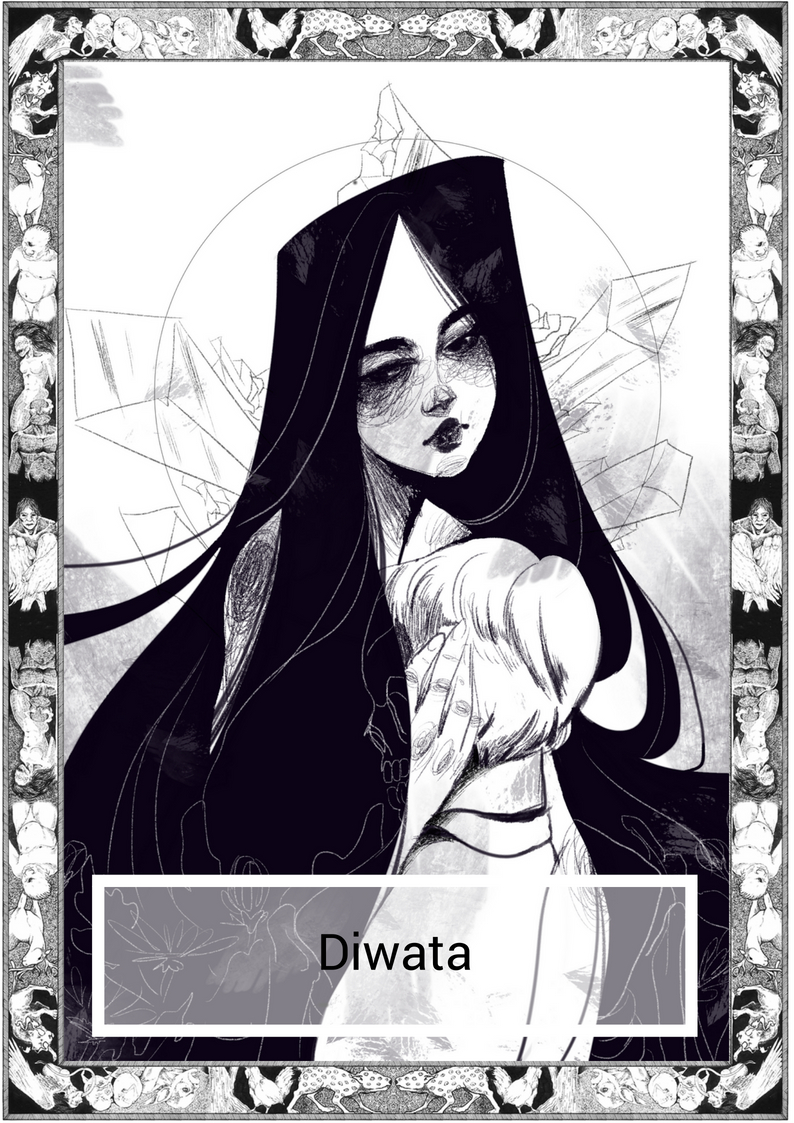
Niyan hamok pakaimod si Kaisa san babaye na labí-lábi an gayon. Naggigilang an kaniya panit na baga an marmol dara san nagtatama na sudang. Kasing-itom san gab-i na wara bulan an kaniya buhok; nan an kaniya ngirit, sugad san maibubutang mo an bílog na kinab-an sa kaniya ngirit.
Nagrukyaw an katawuhan sa kaniya pag-abot. Milagro ini na nautob, wara pa san sugad sini na pangyari sa mga nakaagi na panahon. Maski sayô, wara sa kanira naghunà na maabot an sugad sini na pagkakataon sa kanira bílog na buhay.
Baga an namungnan si Kaisa.
“Diin ka pagkadto?” huring niya sa sadiri.
Mayun san nagdadakò na puwersa sa sulod san kaniya pagkatawo, dire niya mapugulan an kusog sini. Hunubag ini sa kaniya dubdob hanggang sa dire na mapugulan an pagbuswang.
“Makusugon an buot mo para kumanhi pa dini!” kurarat ni Kaisa.
“Ayaw siya pagtatag-uki san sugad sun!” Tinagikan sa hadok an sayô na nakiusyuso dara san kusog san buot ni Kaisa. Nágahom siya magkurahaw sa hampang san Diwata!
Nagngalas an Diwata sa nagsasap-ay na uyam, dire niya masabutan kun nano an rason para kauyaman san sayô na tawo an kaniya presensiya. Lunakaw siya paranî kan Kaisa. Luway-luway niya na ginaptan an pandok sini.
“Uya na ako niyan,” unimod san may lúoy an Diwata kay Kaisa.
Nakatinawa si Kaisa, “Hain ka napulo kataon na an unagi? Hain ka san bag-o pa hamok ako na búhay?” Bunulos an luha sa kaniya pandok, “San sayô pa ako sa mga daraga na intutúyo san mga kapareho mo?”
Mayun san mga klase san kamunduan na naiipon sa labâ san imo buhay. An iba, nagtitinir sa imo, naghuhugdon hanggang sa magtápan sa imo kalag. Sugad sini nan hararumon pa an mundô ni Kaisa. Dunukót ini sa kaniya kalag parehas san dugos na diri nanggad maturutalkas.
“Diin ka pagkuha san kusog san buot para kanhion ako niyan, niyan na sugad na ako sini?!” Lunuyos si Kaisa sa butkon san Diwata, unawas an kaniya hibi pakadto sa sálog na baga an wara katapusan.
Punuyò an katawuhan. Mayun san kasagraduhan sa kalidad san bílog na ladawan.
“Uya na ako niyan,” utro san Diwata.
Nagbatog an Diwata sa paghagumhom san malumuyon na tunog. Inirog sini an karagnas san nagbabawog na mga patong sa kadlagan, an matuninong na bulos san sapâ, nan an maluway na huruding-huding san mga linalang san kapalibutan.
“Inpapatawad ko na ikaw.” Nagdanay an surumaton ni Kaisa sa hapros san tugtog.
=———————=
English Version
Kaisa was left in a strange bed alone. He didn’t even bother to say goodbye, but that’s just the way it was. Boys will be boys.
She picked her clothes off the floor and took a shower. Her skin was raw from the soap rubbing against it. No matter how hard she tried she couldn’t wash off last night.
Maybe she didn’t want to. This was how her weekends went. She would meet a strange man somewhere out in the world, then she would be left alone. Like always.
It was the way the world worked. At least her world.
She dressed herself and went outside. The noontime sun was bright and felt painful against her skin.
There was a gathering of people near the town hall and her curiosity was piqued. There was nothing else to do today so why not go?
She asked an old woman what the commotion was about and was met with disbelief.
“You mean you don’t know?! She has come from the mountain!” the old woman shouted.
“Who is ‘she’? And which mountain did she come from?” Kaisa was confused. It seemed like the whole town was here for this occasion.
“She has come! From the heights of the Skyworld she has come!” no matter how hard she tried Kaisa couldn’t get a meaningful sentence from the old woman, so she gave up and pushed through the crowd to see what the fuss was about.
And as she pushed away a young couple she saw her.
Kaisa had never seen such a beautiful woman. The sunlight glistened against her skin which seemed to be made from precious marble. Her hair was black as a moonless night and her smile; it was almost as if you could fit the whole world into her smile.
All around the crowd cheered at her arrival. It was a miracle made real, nothing like they had ever seen before. None of them would have ever guessed that they would see one such as her in their lifetime.
And Kaisa just stared.
“Where have you been?” she whispered to herself.
There was a force building inside her, one she could not deny. It swelled in her chest until it could not be held back.
“How dare you come here?!” Kaisa burst out.
“Don’ talk to her like that!” a bystander was horrified that she could raise her voice to the Diwata.
The Diwata was confused at the outburst, she didn’t understand why a human would react to her presence that way. She walked towards Kaisa and gently put her hand to the girl’s face.
“I’m here now,” the Diwata looked at Kaisa with pity.
Kaisa laughed, “Where were you ten years ago? Where were you when I was new?” tears streamed down her face “When I was one of those maidens that your kind would come to?!”
There are certain kinds of sadness that build up through your lifetime. Some stay with you, nestling until they shadow your soul. Kaisa’s sadness was that and more. It latched onto her spirit like honey and would not be shaken off.
“How dare you come to me now, when I am this!?” Kaisa crumpled into the arms of the Diwata, her tears flowing into a seemingly endless river.
Silence reigned through the crowd. The scene had an almost sacred quality about it.
“I’m here now,” the Diwata repeated.
The Diwata began to hum a soft tune. It echoed the bending of the bamboo forest, the silent dignity of the running stream and the gentle sound of nature’s creatures.
“I forgive you.” Kaisa’s words lingered through the music.
*The Bikol languages or Bicolano languages are a group of Central Philippine languages spoken mostly in the Bicol Peninsula in the island of Luzon, the neighboring island province of Catanduanes and the island of Burias in Masbate. There is a dialect continuum between the Visayan languages and the Bikol languages; the two together are called the Bisakol languages.
The Tabaco-Legazpi-Sorsogon (TLS) dialect is spoken in the eastern coast of Albay and the northeastern part of Sorsogon. TLS is the dialect that has been most influenced by the Inland Bikol languages.
Written by Karl Gaverza
Bicol Translation by Klara Espedido
Copyright © Karl Gaverza
Translation Copyright © Klara Espedido
Inspired by the Diwata myths
Diwata Illustration by Kristienne Amante
FB: Creatorivm
