
*Note this story is in Cebuano
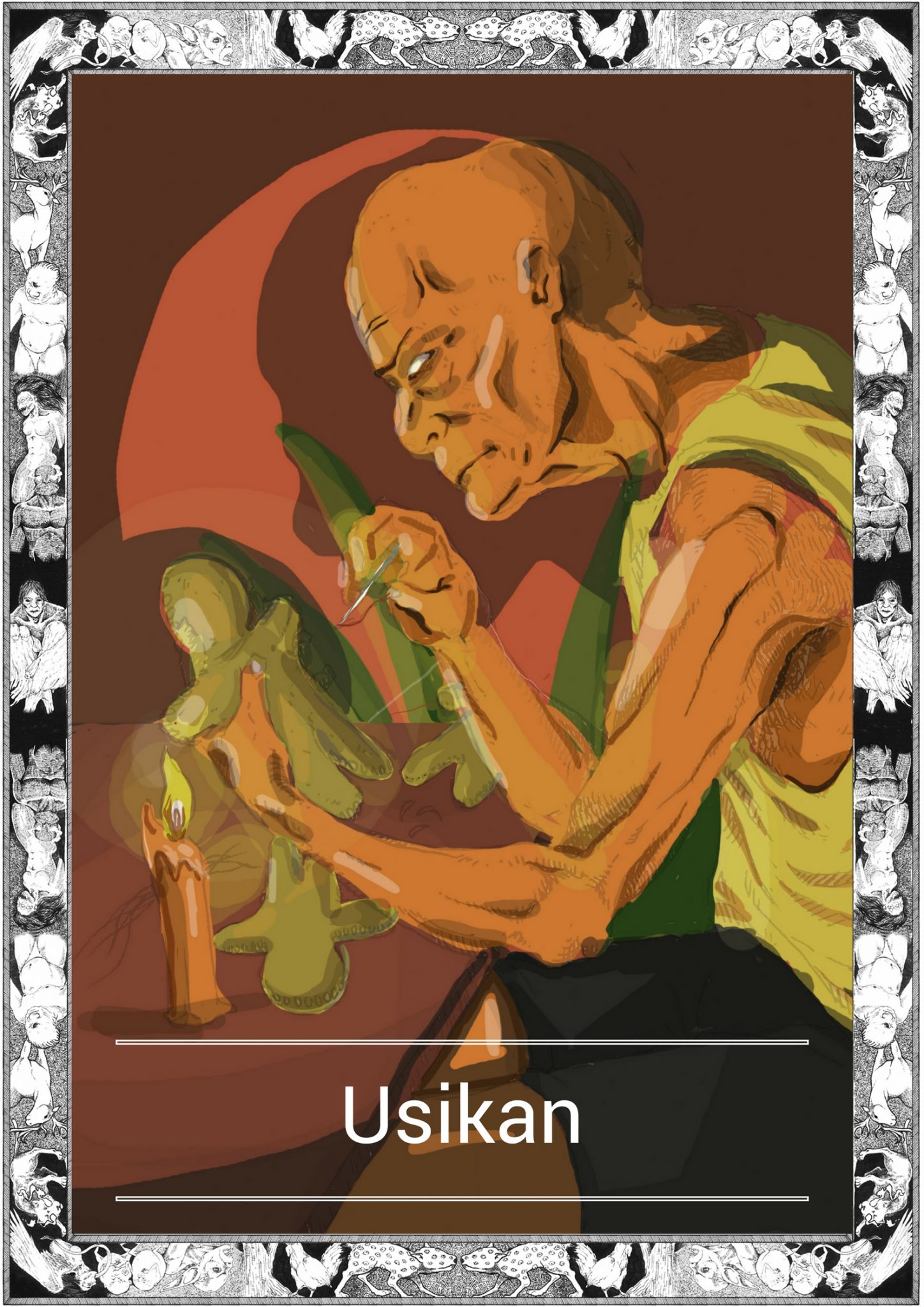
Moagos sa sulod sa lalake ang salamangka. Bisan pud ang iyang pagkasuko. Pero karon, dili ni tungod sa pagkuha niya para magbuhat ug gamay na panimalos, samtang gihawiran niya ang monyika, naghinumdum siya sa pagkapersonal ining iyang ibuhat.
Naay duha na paagi ang usik para makasulod sa lawas sa usa ka tawo. Gipasalamat sa lalaki ang iyang mga diyos-diyos na itomon kay naa siya ining gahum.Nabuhi siya uban ini sa iyang tibuok na kinabuhi ug kahibalo siya ang mga gamay na paagi na makasulod ang mahika sa usa ka tawo padulong sa usa pa.
Naa man siya aprentise. Ang usik, pwede matud-sa uban. Isa man ni sakit kaayo na proseso, usa na dili sulayi sa usa ka normal na tawo. Pero, ang gaba ini modani sa mga tawo na desperado o maldito kaayo na makahibalo sa mga pamaagi ini.
Gitinug-an niya ang monyika ug hilom na naglingkod. Usa ni na gubat na lahi sa uban, ug dili siya makahibalo kung unahon na niya ang pag-atake. Dili niya paryente ang aprentis, pero naningkamot ang lalake sa iya, sama sa naningkamot ang mga halimaw sa ilang kaparehas.
Sa primero na nasulay sa aprentis ang gaba, labi na malipayong adlaw sa iya. Ang batan-on gipili na ibalhin ang mga bubog sulod sa lawas sa biktima. Ang lalaki, nay pagkaganahan sa mga klasiko ug naghiyom siya samtang naglanog sa kinagabhion na langit ang mga siyagit sa mga biktima.
Tanan sina nakasinati ug pagkagarbo. Pero ang ilang pagkagarboso ang paagi sa ilang pagkapukan.
Hinay-hinay na moapas ang kandila, samtang ang lalaki nakasinati ug kati sa iyang aping. Iyang gikalot ining bahin hangtud sa naay nawagtang na mga gamay na grano.
Balas.
Usa ka hagit ug insulto.
Karon, nagsugod na ang giyera. Ang maestro ug ang aprentis, mosige lang ug mag-away, hangtud sa usa lang sa ila ang mabilin. Gusto unta sa lake na dili inani mohitabo unta, kay, nagsalig pa ang iyang dughan, pwede pa magdungan ang duwa ka usikan sa barrio.
Pero, dili pud niya pwede pasagdan ang pagkamasupilon sa aprentis, ug labi niya dili niya pud pasagdan na ang usa ka batan-on magpakita sa usa ka gahum na dili pa niya nakuha kaayo.
Gikuha sa lalake ang monyika sa iyang mga kamot, ug gibutang ang pila ka labaha sulod sa asa man nabutang ang mga mata sa monyika. Wala nay ayo kon magdugay pa ang pagsukol na ini.
Ang batan-non na aprentis, makahibalo na ang tinuood na gahum, naa na sa imong pagkatawo pa lang.
=——————=
English Version
The magic flows through the man, and so does his anger. This time it isn’t about being hired to carry out some petty revenge, as he clutches the doll he thinks about how personal this matter is.
There are two ways the usik can move through a person’s body. The man thanks his dark gods that he was born with the power, he had lived with it his whole life and knew the small ways the magic could move from one person to another.
Then there was his apprentice. The usik could be taught to others, it was an excruciating process, one that no normal person would be crazy enough to try, but then again the curse always attracted those desperate or cruel enough to learn its ways.
He stared at the doll and sat in silence. This was a war unlike any that would be fought, and he didn’t know if he wanted to stage a preemptive strike. The apprentice was not his flesh and blood, but the man still cared about his student in the way monsters cared about their own kind.
The first time his apprentice ever successfully practiced the curse was a proud day in the man’s life. The boy chose shards of glass to transfer into the victim’s body, the man had a soft spot for the classics and smiled as the screams of the victim echoed through the night sky.
Pride was all they felt that night. Pride would also be his downfall.
The candle was slowly burning away when the man suddenly felt an itch in his cheek. He scratched until small grains fell out.
Sand.
A challenge and an insult.
Now the war had truly begun. Master and apprentice would battle until only one of them would be left. The man wished it didn’t have to be this way, truly, in his heart he believed that there was room for more than one usikan in the village.
But he could not tolerate disobedience and he would certainly not tolerate a young upstart trying to show people the power he had just barely earned.
The man took the doll in his hands and set a few razorblades inside where the doll’s eyes were. There was no point in dragging the battle longer than it had to be.
The young apprentice was about to learn that true power is something that you are born with.
————————–————————–————————
*The Cebuano language, alternatively called Cebuan and also often colloquially albeit informally referred to by most of its speakers simply as Bisaya (“Visayan”, not to be confused with other Visayan languages nor Brunei Bisaya language), is an Austronesian regional language spoken in the Philippines by about 21 million people, mostly in Central Visayas, western parts of Eastern Visayas and most parts of Mindanao, most of whom belong to various Visayan ethnolingusitic groups, mainly the Cebuanos. It is the by far the most widely spoken of the Visayan languages, which are in turn part of wider the Philippine languages. The reference to the language as Bisaya is not encouraged anymore by linguists due to the many languages within the Visayan language group that may be confused with the term.
Written by Karl Gaverza
Cebuano Translation by Ruben Jeffrey Asuncion
Copyright © Karl Gaverza
Translation Copyright © Ruben Jeffrey Asuncion
Inspired by the Usikan description in Cebuano Sorcery: Malign Magic in the Philippines. Lieban 1967.
Usikan Illustration by Leandro Geniston from Aklat ng mga Anito
FB: That Guy With A Pen
Color by Yanna Gemora
FB: Yannami
